
Materials
Slate, tile and flat roof systems in Cumbrian weather
How natural slate, concrete and clay tile and modern flat roof systems perform against Cumbrian wind, rain and frost.
- Written by working roofers
- Cumbria-specific
- Updated 2025-03-18
24/7
Emergency roofing response across Cumbria and the Borders, answered day and night.
The short answer
Natural slate remains the best long-term covering for most Cumbrian and Borders property: it handles freeze-thaw, sheds driven rain and typically outlasts its own fixings. Concrete and clay tiles suit many post-war properties at lower cost, and modern single-ply and GRP flat systems, correctly laid to falls, comfortably outperform the old pour-and-roll felt they replace.
Key points
What to take away
- Exposure dictates headlap, fixings and ridge system, not just material
- Reclaimed slate is often the right aesthetic and economic choice
- Flat roofs fail at details and falls far more often than in the field
- Lead detailing is where cheap roofs are quietly cheapened
Natural slate
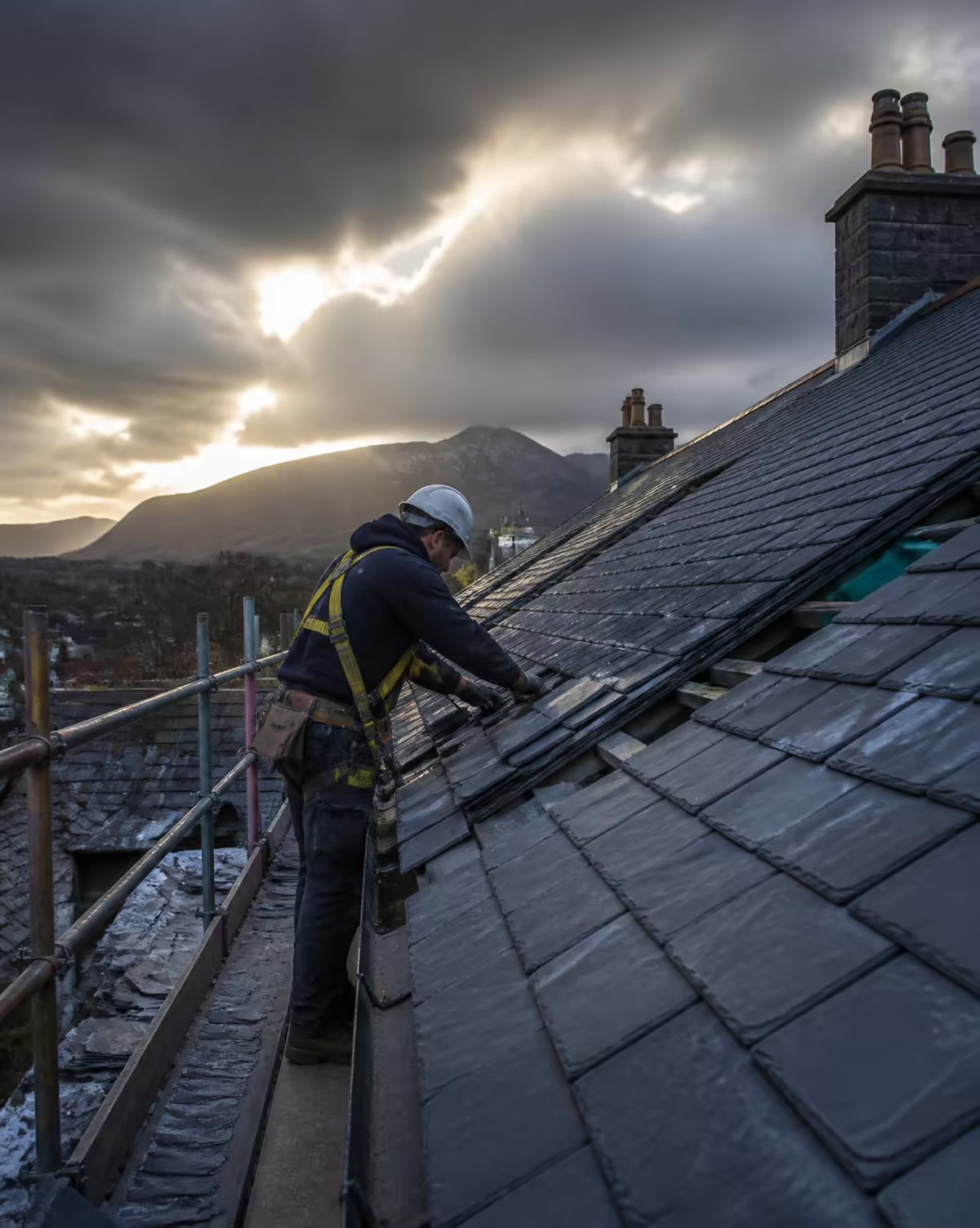
Dense, frost-resistant and dimensionally stable, slate copes with wind-driven rain and repeated freezing better than almost anything else. Its practical lifespan is usually limited by nail corrosion rather than by the slate itself, which is why re-roofs frequently salvage a large share of the existing material.
Tile
Concrete and clay tiles are a sound, cost-effective choice on properties designed for them. On exposed sites the specification matters: correct headlap, mechanical fixing of perimeter and ridge tiles, and dry-fix systems in place of mortar that will crack out within a decade.
Flat roofs
Modern single-ply membranes and GRP systems, over an insulated warm deck with properly formed falls and upstands, are a different product from the failing felt they usually replace. Almost every flat roof failure we attend traces to standing water, a poorly formed upstand or a badly terminated edge — not to the membrane itself.
Common questions
Services
Related services
Go deeper in the advice centre
This guide is the long read. These answers take the same subject question by question — the evidence to look for, how serious it is, and what your options are.
- Flat roofing
- Can a drone inspect a flat roof properly?
- Can a leaking flat roof be repaired?
- Is EPDM better than roofing felt?
- Is GRP better than EPDM?
Keep reading
Related guides
Roof repair or full replacement: how to decide
Repair when the covering is sound and the failure is localised — a slipped run of slates, a split lead valley, a cracked ridge. Replace when failures are recurring across the whole roof, the fixings have reached nail fatigue, or the battens and underlay are perished, because at that point each repair simply moves the next failure a metre sideways.
What actually affects the cost of a roof in Cumbria
Roofing costs are driven by access and scaffolding, roof size and pitch, the covering material, the amount of leadwork and detailing, and the condition of the timber underneath, which is only fully known once the covering is stripped. A quote that ignores any of these is not comparable with one that includes them.
Get a written diagnosis on your roof
Free inspection and quotation across Cumbria, southern Scotland and the North East. For water coming in now, call 07777389016 — answered 24/7.