
Repair or replace
Roof repair or full replacement: how to decide
When a roof repair is the right call, when a re-roof is cheaper long term, and the specific tests we use to tell the difference.
- Written by working roofers
- Cumbria-specific
- Updated 2025-01-20
24/7
Emergency roofing response across Cumbria and the Borders, answered day and night.
The short answer
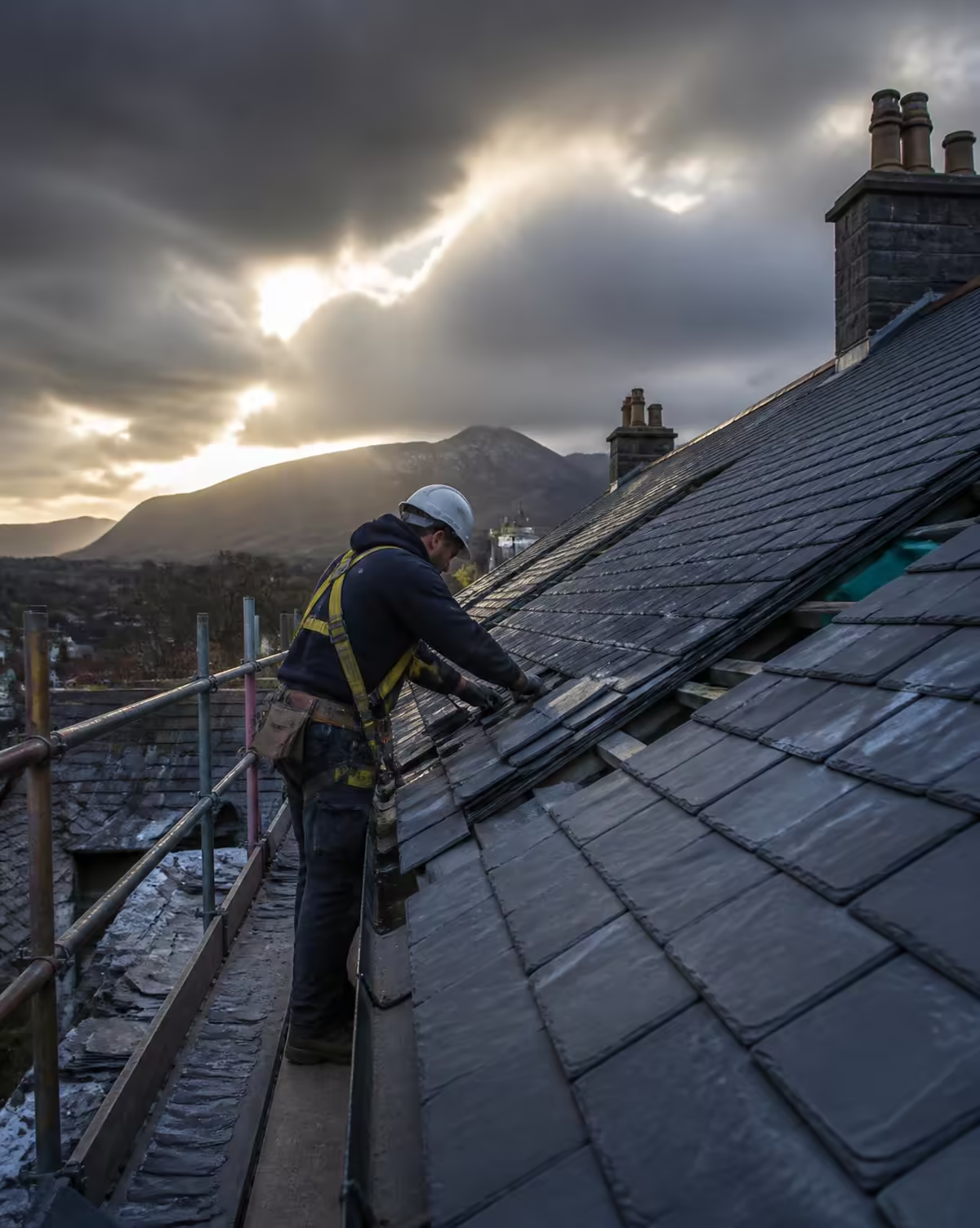
Repair when the covering is sound and the failure is localised — a slipped run of slates, a split lead valley, a cracked ridge. Replace when failures are recurring across the whole roof, the fixings have reached nail fatigue, or the battens and underlay are perished, because at that point each repair simply moves the next failure a metre sideways.
Key points
What to take away
- Localised, one-off failure on sound coverings: repair
- Repeat slippage across multiple elevations: usually nail fatigue, re-roof
- Perished underlay and soft battens cannot be fixed from the outside
- Age alone is not a reason to re-roof a good slate roof
The tests that actually decide it
We look at four things: how many separate defects there are, whether they are on one elevation or all of them, the condition of the fixings, and the state of the battens and underlay seen from inside the loft.
One defect on one elevation with sound timber is a repair. Multiple slips on multiple elevations with rusted or fatigued nails is a roof telling you it has finished.
Nail fatigue explained
Slates are held by two nails. Over decades those nails corrode and shear, and the slate slides. Once it starts, it continues across the roof at random, which is why the third or fourth callout in two years costs more than the re-roof would have.
Natural slate itself often outlasts its fixings, so a re-roof can frequently reuse a large proportion of the existing slate — which changes the economics considerably.
The honest middle option
Sometimes the right answer is a phased approach: make the worst elevation good now, plan the rest for the next financial year. We will say so, and we will put it in writing with the risks of waiting spelled out.
Common questions
Services
Related services
Go deeper in the advice centre
This guide is the long read. These answers take the same subject question by question — the evidence to look for, how serious it is, and what your options are.
- Repair or replace
- Can an old slate roof still have years of life left?
- Can existing slate be reused during re-roofing?
- Does an old roof automatically need replacing?
- How do I know whether my roof should be repaired or replaced?
Keep reading
Related guides
Ten signs your roof needs attention (and which ones are urgent)
The urgent signs are active dripping, a sagging or bulging ceiling, daylight visible in the loft, and slates or tiles on the ground after a storm — those need a call the same day. Damp patches, blown render, blocked gutters, moss build-up, loose ridge mortar and rust-stained fixings are warnings you should have inspected within weeks, not hours.
What actually affects the cost of a roof in Cumbria
Roofing costs are driven by access and scaffolding, roof size and pitch, the covering material, the amount of leadwork and detailing, and the condition of the timber underneath, which is only fully known once the covering is stripped. A quote that ignores any of these is not comparable with one that includes them.
Get a written diagnosis on your roof
Free inspection and quotation across Cumbria, southern Scotland and the North East. For water coming in now, call 07777389016 — answered 24/7.