
Skip to content

24/7 emergency roofing response — Cumbria & the Borders

Roofing advice

Repair or replace: how the decision is actually made

Replacement is a legitimate answer some of the time and the wrong answer often. These pages set out the criteria rather than the sales pitch.

  • Repair
  • Replacement
  • Costs
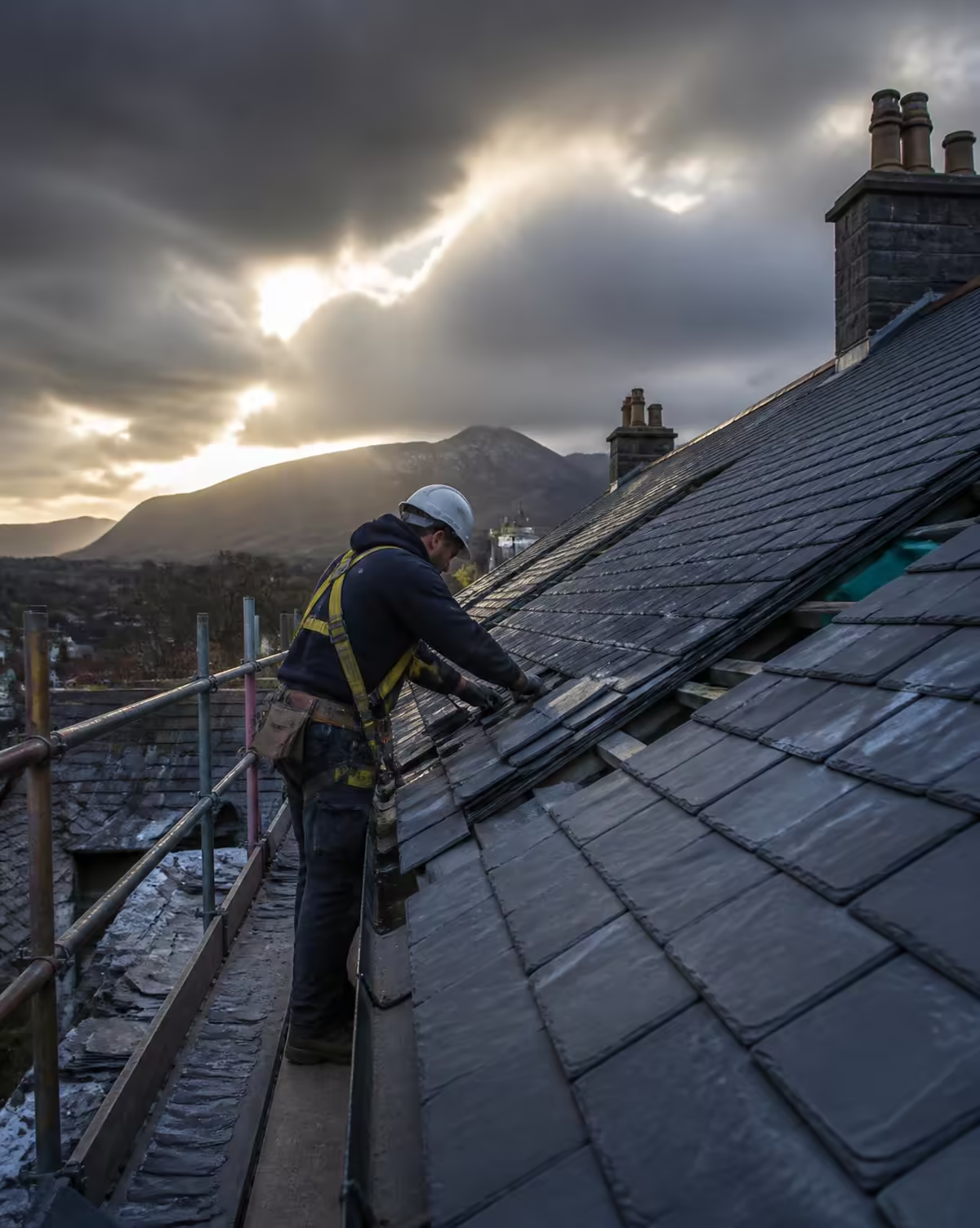
Roofer re-slating a pitched Cumbrian roof from scaffolding at dusk

24/7

Emergency roofing response across Cumbria and the Borders, answered day and night.

The short answer

The decision turns on how much of the roof is failing, whether the failure is at the covering or the structure beneath it, and how much serviceable life the rest of the roof has. Widespread failure of fixings, battens or decking points to renewal; isolated defects on a sound roof point to repair.

What matters here

Before you decide

Count what is failing, not what looks tired

A weathered but sound slate roof can have decades left. What matters is whether fixings, battens, underlay or decking are failing across the roof or only in identifiable areas.

Repeat repairs are information

Two or three separate repairs in different areas within a short period usually means the failure is systemic rather than local. That is the point at which renewal deserves proper costing.

Partial renewal is often the honest middle answer

Renewing one elevation, one valley run or the ridge and verge details can restore a roof for a fraction of a full strip and recover. It is frequently skipped in quotations that only offer repair or replacement.

Some cases need investigation before a decision

Where the extent of hidden decay is unknown, the right next step is opening up a small area or a full survey — not committing to a specification that assumes the worst or the best.

In depth

Full guides in this subject

Questions answered

Answers in this subject

Can just one section of a roof be replaced?

Yes, and it is often the right answer. Where one slope, valley or elevation has failed while the rest is serviceable, that area can be stripped and renewed on its own. The practical questions are how the new work ties into the old, whether the materials can be matched, and whether the untouched areas have enough life left to be worth keeping.

What makes partial renewal work

A clean boundary — a ridge, hip, valley or abutment — makes for a durable junction between new and existing work. Renewal that stops mid-slope is harder to detail and more likely to leak at the join.

Matching matters on traditional coverings. Reclaimed slate of the same size and thickness usually blends acceptably; a different profile on one slope rarely does, particularly on a prominent elevation.

What evidence should you look for?

These are indications, not conclusions. Each one narrows where to look; only an inspection confirms a cause.

  • One elevation is markedly worse than the others.

    Exposure may have aged that slope faster, making partial renewal proportionate.

    Areas that may need investigating

    • fixings on the other slopes
    • boundary details available

Urgency: Arrange an inspection

This is a scoping decision that needs evidence from each slope, not just the worst one.

Repair or replace?

Partial renewal is worth costing when

  • One slope or elevation failing with sound areas elsewhere

Further investigation is the right next step when

  • Condition of the retained slopes has not been assessed

How we can help

What should you do next?

Ask for the condition of every slope to be reported, not only the one being quoted, so you can judge whether partial renewal is genuinely the better value.

Can roof timbers be repaired without replacing the whole roof?

Usually. Decay tends to be localised at bearings, rafter feet and wall plates where water collected, and affected members can often be spliced, sistered or replaced individually with the covering stripped over that area only. What makes wider work necessary is decay through the structure rather than at identifiable points.

How localised timber repair works

The covering is removed over the affected area, decayed sections are cut out and new timber is fixed to sound material, then the area is re-covered. The source of the water is dealt with at the same time, because otherwise the new timber has the same future as the old.

Where the extent is uncertain, or where members are structurally significant, a structural engineer's input is the appropriate step before specifying.

What evidence should you look for?

These are indications, not conclusions. Each one narrows where to look; only an inspection confirms a cause.

  • Decay confined to rafter feet along one wall plate.

    Localised repair may be sufficient once the water source is corrected.

    Areas that may need investigating

    • extent along the plate
    • source of wetting
    • adjacent members

Urgency: Prompt repair

Timber decay progresses while water continues to arrive, and the affected area grows rather than stabilising.

Treat it as more urgent if you see:

  • Members are cracked or have moved at a bearing

Repair or replace?

Substantial repair fits when

  • Decay at identifiable members or bearings

Further investigation is the right next step when

  • Extent not established, or structural advice needed

How we can help

What should you do next?

Ask for the extent of decay to be recorded and for the water source to be included in the same scope of work.

When does damaged underlay mean more extensive work?

Underlay is the second line of defence, and it can only be renewed by removing the covering above it. Localised damage under a specific defect can be dealt with locally. Underlay that has perished generally cannot, which is why its condition is often what turns a repair discussion into a renewal discussion.

Why condition matters more than presence

Old bitumen felt becomes brittle and tears at the laps and at nail points; once that has happened across a slope, every future covering defect admits water into the roof space directly.

Because it sits beneath the covering, sampling at a few points is how it gets assessed. A report that comments on underlay without anyone having lifted anything is speculating.

What evidence should you look for?

These are indications, not conclusions. Each one narrows where to look; only an inspection confirms a cause.

  • Underlay tears when lifted at more than one point.

    Renewal may only be achievable by stripping the covering.

    Areas that may need investigating

    • condition at several points
    • batten condition beneath

Urgency: Arrange an inspection

Underlay condition governs the scope of any larger work, so it is worth establishing before a specification is written.

Repair or replace?

A local repair is realistic when

  • Damage confined to the area of one defect

Substantial repair fits when

  • Strip and relay to renew underlay while retaining sound covering

Further investigation is the right next step when

  • Condition unknown because nothing has been lifted

What should you do next?

Ask for underlay to be sampled at more than one point before any replacement recommendation is finalised.

Get a written diagnosis on your roof

Free inspection and quotation across Cumbria, southern Scotland and the North East. For water coming in now, call 07777389016 — answered 24/7.