
How much does replacing slipped slates or tiles cost?
The components themselves are rarely the significant cost. Access is, and so is the number of visits. Refitting several slates in one visit costs far less per slate than three separate call-outs, which is why it is worth asking whether the surrounding fixings are in the same condition before booking work.
Why access dominates
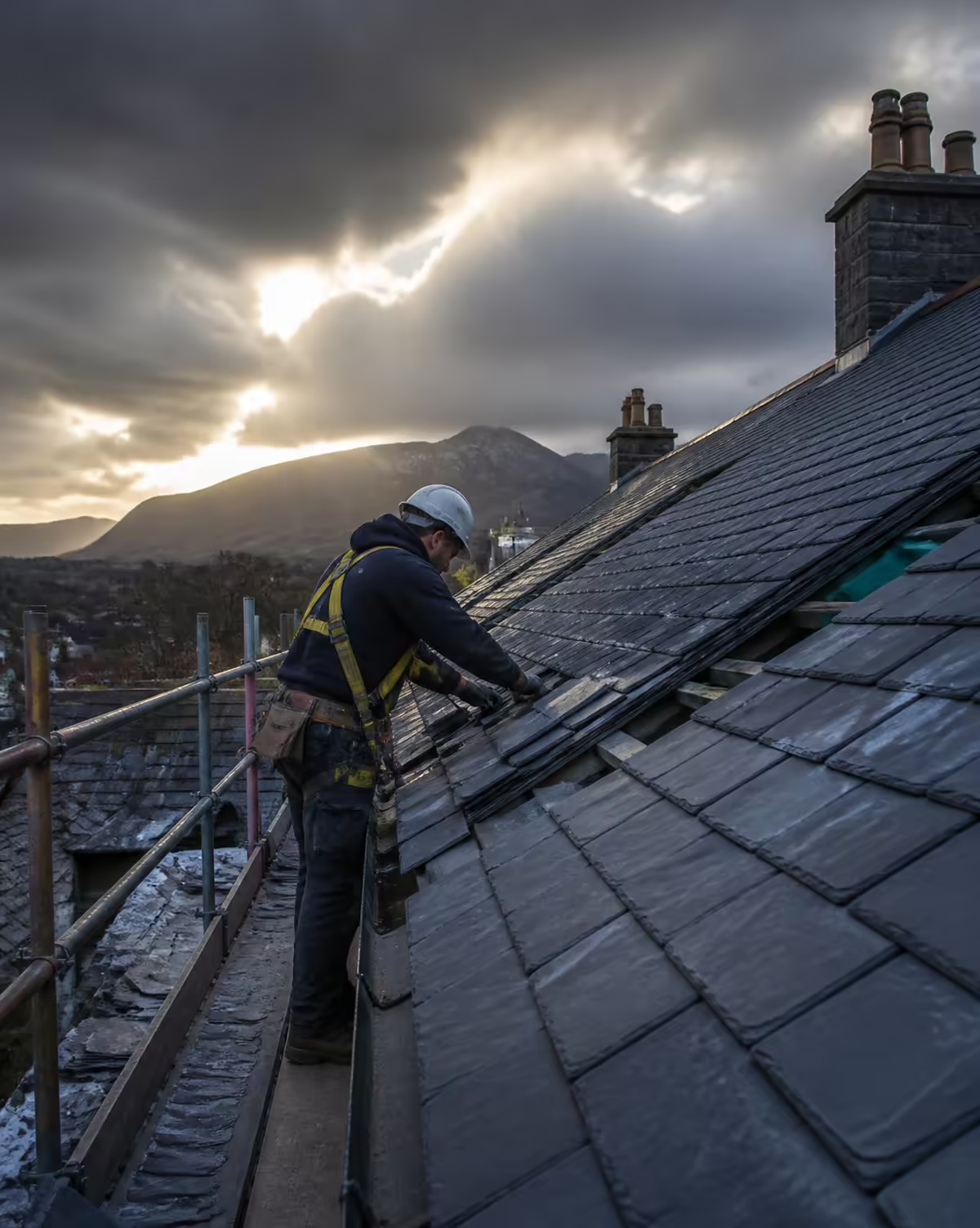
Reaching a slate near the eaves of a bungalow and reaching one near the ridge of a three-storey terrace are different operations with different equipment. Where a tower or scaffold is required, that provision is usually the larger part of the invoice.
That is also the argument for a survey before repair on a roof with repeated slipping: it identifies everything to be done in one visit rather than three.
What evidence should you look for?
These are indications, not conclusions. Each one narrows where to look; only an inspection confirms a cause.
Slates have slipped in several places over recent years.
Doing the work in one visit will normally cost less than repeated call-outs.
Areas that may need investigating
- full extent of loose or slipped components
- fixing condition
Urgency: Prompt repair
Openings in the covering allow water in during driven rain, and slipped components can fall, so they are dealt with without long delay.
Repair or replace?
A local repair is realistic when
- Isolated slipping with sound surrounding fixings
Partial renewal is worth costing when
- Repeated slipping across one slope
How we can help
- Roof RepairsPlanned roof repair fixes an identified defect — slipped slates, cracked tiles, failed flashings, valley or ridge problems — before it becomes water ingress. Repairs are appropriate where the covering and structure are otherwise sound and the fault is localised.
- Slate RoofingSlate roofing covers the installation and repair of natural and fibre-cement slate roofs. Natural slate is the traditional covering across much of Cumbria and the Borders, has an exceptionally long service life, and is usually limited by its fixings rather than the slate itself.
Related questions
What should you do next?
Ask for the whole slope to be checked at the same visit, so everything loose is dealt with once rather than in stages.