
Skip to content

24/7 emergency roofing response — Cumbria & the Borders

Roofing advice

How to work out what is wrong with your roof

These answers show how the evidence is assembled, so you can arrive at a conversation with a roofer already knowing what matters.

  • Inspections
  • Leaks
  • Damage
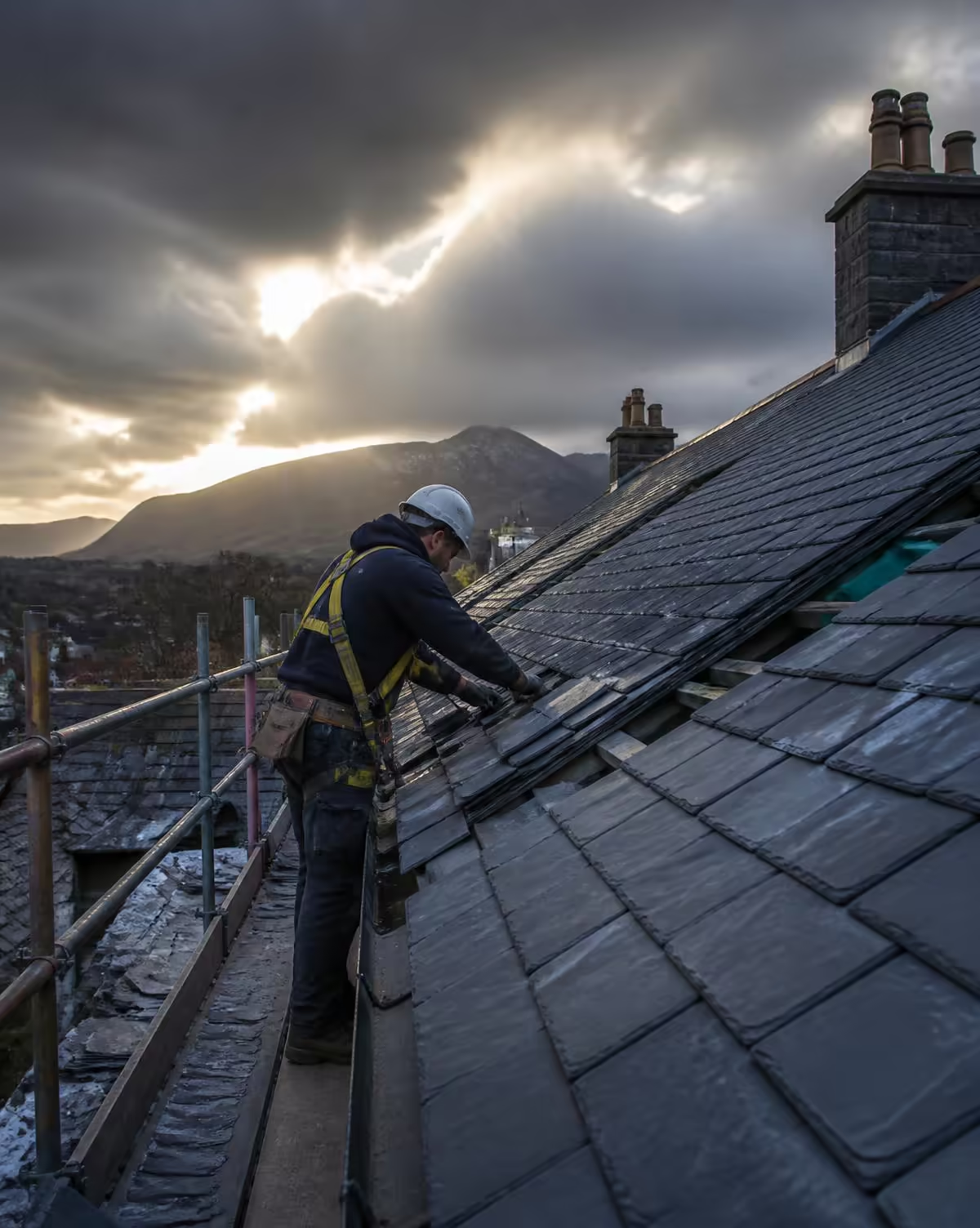
Roofer re-slating a pitched Cumbrian roof from scaffolding at dusk

24/7

Emergency roofing response across Cumbria and the Borders, answered day and night.

The short answer

Diagnosing a roof means gathering evidence in a set order: what you can see inside, what you can see from the ground, what the weather was doing, and then what a close inspection of the suspected area shows. Skipping straight to a repair without that sequence is how the wrong work gets done.

What matters here

Before you decide

Inside first, then outside

The roof space usually tells you more than the roof surface: staining on rafters and battens, damp insulation, daylight, and the direction water has run all narrow the search before anyone goes up.

Photograph and date what you see

Dated photographs of a stain spreading, or of debris after a specific storm, are useful for the diagnosis and often for an insurance claim later.

Know the limits of a visual inspection

A visual survey — from the ground, from a ladder, or by drone — shows surface condition and displaced components. Concealed decking, hidden timber decay and buried flashings need physical access or opening up.

Never inspect a roof yourself in unsafe conditions

Working at height is the largest single cause of fatal injury in UK construction. If your evidence gathering needs you on a ladder or a roof in wind or wet conditions, stop and have it looked at properly.

In depth

Full guides in this subject

Questions answered

Answers in this subject

Can two different roof defects produce the same symptoms?

Regularly, and it is one of the main reasons repairs fail. A single damp patch can be produced by a slipped covering, a failed flashing, a blocked valley, condensation or a plumbing fault. It can also be produced by two of them at once, which is why a leak sometimes improves after a repair without stopping.

Why partial improvement is a warning sign

If a repair reduces a leak without curing it, the usual explanation is that one of two contributing defects was addressed. Interpreting that as a failed repair, or as evidence the roof needs replacing, is a mistake in both directions.

The reliable approach is to establish each contributing route separately, which is where controlled testing and roof space inspection earn their keep.

What evidence should you look for?

These are indications, not conclusions. Each one narrows where to look; only an inspection confirms a cause.

  • Leak reduced but did not stop after a repair.

    A second route may be contributing to the same symptom.

    Areas that may need investigating

    • other details above the symptom
    • condensation
    • plumbing and tanks

Urgency: Arrange an inspection

Multiple contributing causes need identifying before more money is spent on further repairs.

What should you do next?

Tell whoever inspects the roof exactly what changed after the last repair — improvement, no change, or a shift in where water appears.

How can weather conditions help diagnose a roof leak?

The conditions in which a leak appears narrow the possibilities more efficiently than anything else a homeowner can record. Wind direction points to an elevation. Rainfall duration points to volume or drainage. Cold, dry weather points to condensation. Snow melt points to blocked drainage or ice at the eaves.

What to write down

Date, roughly how heavy the rain was, the wind direction if you know it, how long the rain had been falling before water appeared, and whether it stopped soon after. Three or four entries usually identify a pattern.

Leaks that appear when there has been no rain at all are the most useful entries of the lot, because they normally point away from the covering entirely.

What evidence should you look for?

These are indications, not conclusions. Each one narrows where to look; only an inspection confirms a cause.

  • Water appears during snow melt rather than rainfall.

    Meltwater may be backing up at blocked gutters, valleys or eaves.

    Areas that may need investigating

    • gutters and valleys
    • eaves detail
    • underlay laps at the eaves
  • Damp appears in cold, dry weather.

    Condensation is a more likely mechanism than ingress.

    Areas that may need investigating

    • ventilation
    • insulation
    • extract fan routes

Urgency: Monitor

Keeping a weather log is an observation step. It informs the inspection rather than replacing it, and it costs nothing.

What should you do next?

Keep a short log for two or three weeks of weather and hand it to whoever inspects the roof.

When is physical roof access necessary?

Whenever a question cannot be answered by looking. Testing whether a covering is secure, lifting a slate to check battens and underlay, probing timber, checking whether a flashing is dressed or merely sealed, and confirming what a survey could only suggest all need hands on the roof rather than a camera above it.

The distinction that matters

Visual inspection, from the ground or by drone, establishes where to look and records condition. Physical access establishes cause, because components can be moved, tested and opened up. Reports that blur the two are hard to rely on.

In practice the efficient sequence is visual first, then physical access at the specific locations the visual work identified — which normally means less access equipment, not more.

What evidence should you look for?

These are indications, not conclusions. Each one narrows where to look; only an inspection confirms a cause.

  • A survey has identified a possible defect but not its extent.

    Confirming extent generally needs components lifted or opened up.

    Areas that may need investigating

    • battens and underlay at that point
    • surrounding fixings

Urgency: Arrange an inspection

Deciding on the access method is part of planning a diagnosis, not a defect in itself.

What should you do next?

Ask which findings in your report came from visual observation and which were physically confirmed, and what it would take to confirm the rest.

Why is inspecting inside the loft useful?

Because it shows what the roof surface cannot: where water has travelled, how long it has been happening, whether timber is affected, and whether the damp is ingress or condensation. The roof space is also the only place a homeowner can usually look safely, which makes it the most useful evidence you can gather yourself.

What the roof space tells us

Staining records history, not just the present. A tide mark shows repeated wetting; a fresh drip shows an active route. Damp insulation localises the entry area. Timber condition at rafter feet and bearings tells us whether the problem has become structural.

Ventilation, insulation coverage and extract fan routes are all visible here too, which is how condensation is separated from a leak before anyone prices roof work.

What evidence should you look for?

These are indications, not conclusions. Each one narrows where to look; only an inspection confirms a cause.

  • Wet insulation in one defined area.

    The entry point is likely to be close to directly above it.

    Areas that may need investigating

    • details above that point
    • underlay laps
  • Moisture spread widely on cold surfaces.

    Condensation may be the mechanism rather than ingress.

    Areas that may need investigating

    • eaves and ridge ventilation
    • extract fan discharge

Urgency: Arrange an inspection

Roof space findings usually change the diagnosis, so they are worth gathering before work is specified rather than after.

What should you do next?

If you can access the roof space safely with a torch on a dry day, photograph anything stained or damp and note where it is relative to the rooms below.

Get a written diagnosis on your roof

Free inspection and quotation across Cumbria, southern Scotland and the North East. For water coming in now, call 07777389016 — answered 24/7.