
Diagnose your roof
When is drone inspection more useful than a ladder inspection?
Where a drone survey answers the question faster and more safely than a ladder, and where a ladder or physical access is still required.
- Evidence before expenditure
- Options, not pressure
- Updated 2026-09-16
24/7
Emergency roofing response across Cumbria and the Borders, answered day and night.
A drone is more useful whenever the question is where to look. It covers whole elevations, reaches ridges, upper slopes and areas a ladder cannot safely serve, and records dated images throughout. A ladder remains the better tool for close work at eaves level, and for anything that has to be touched rather than seen.
What a ladder can and cannot reach
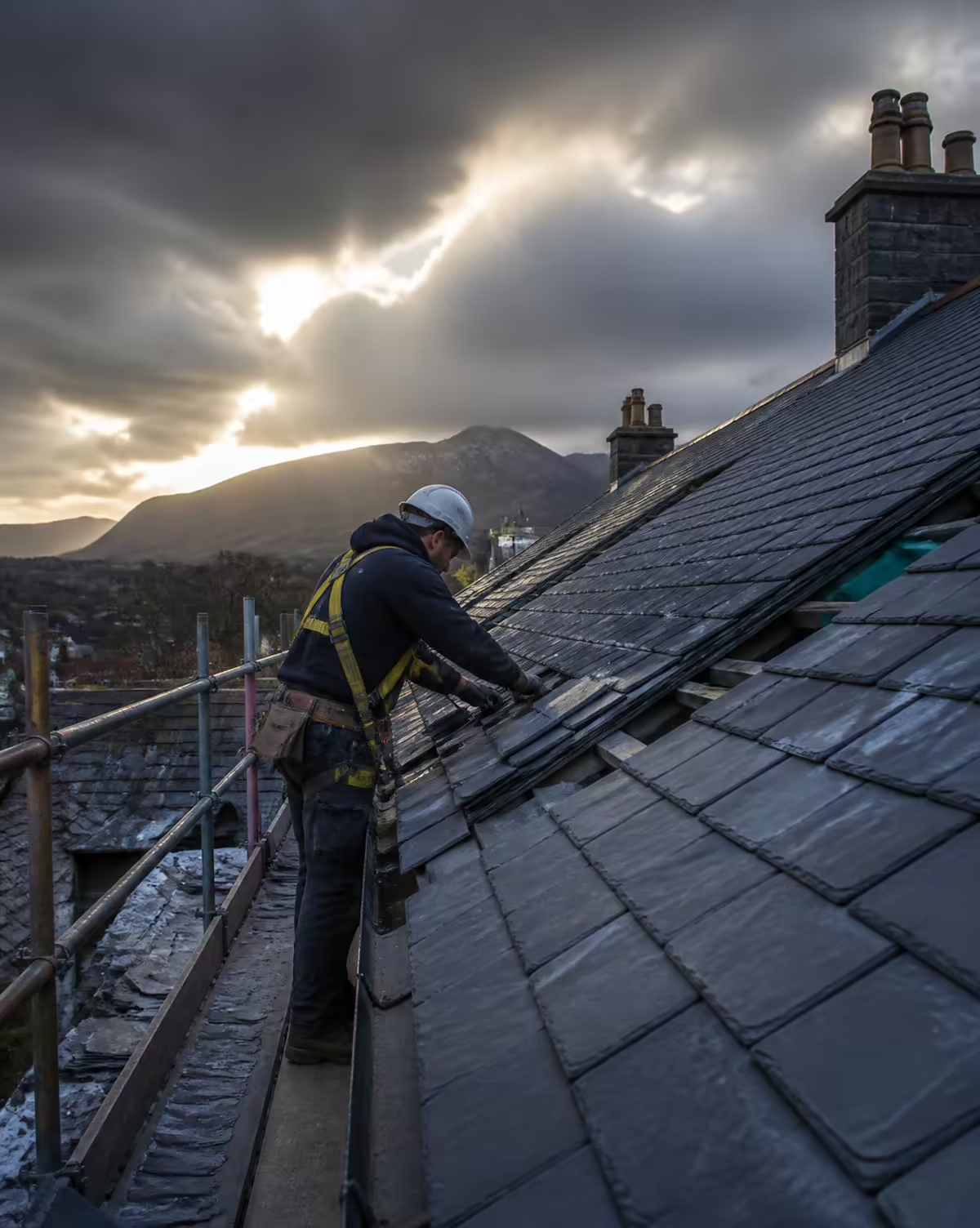
A ladder gives safe access to gutters, eaves details and the lowest part of a slope. Beyond that, on a pitched roof, it gives a view of very little: the ridge, the upper slope, valleys and the far side of a chimney are all out of sight.
Working from a ladder onto a roof is also where most domestic roofing accidents happen, particularly on wet, mossy or fragile coverings.
Where the drone is the better tool
High, steep, fragile and awkward roofs, whole-elevation coverage, ridges and hips, chimney heads, valleys, box gutters and roof lights. It also suits situations where scaffolding would otherwise be erected purely to look at something.
The dated image set is a second benefit: it gives you a record to compare against in future, and evidence to discuss rather than a verbal description.
- Roofs above two storeys or unusually steep
- Fragile coverings that should not be walked on
- Whole-elevation assessment after a storm
- Chimney heads, valleys and ridge details
What neither method resolves
Both are visual. Neither establishes the condition of battens, underlay or decking, timber condition inside the structure, or moisture within a flat roof build-up. Those need physical access, roof space inspection or opening up.
A drone survey should say so plainly. Nobody should suggest that flying a roof has ruled out concealed defects, because it cannot.
Conditions that limit a drone survey
Strong wind, heavy rain and poor light all reduce the quality and safety of a drone survey, so flights are usually planned for calmer, brighter conditions rather than carried out on demand regardless of weather. Nearby trees, overhead cables and restricted airspace near airports can also limit where and how a drone can be flown safely.
None of this makes drone survey unreliable; it simply means the timing of a flight is chosen deliberately rather than fitted around an emergency.
Choosing between the two honestly
For most routine inspections of a pitched roof, a drone survey answers the initial question of where to look more quickly and more safely than a ladder ever could. For work that involves lifting a slate, testing a fixing or dressing a flashing, physical access is unavoidable regardless of how good the images are.
A sensible sequence is drone or visual survey first to identify the areas of concern, followed by targeted physical access only where the images cannot settle the question. This sequencing generally reduces the total amount of access equipment needed over the course of a diagnosis, since it is arranged for the specific spots that need it rather than the whole roof by default.
What evidence should you look for?
These are indications, not conclusions. Each one narrows where to look; only an inspection confirms a cause.
Symptom is internal but nothing is visible from the ground.
Whole-elevation imagery may locate the area to investigate.
Areas that may need investigating
- upper slopes
- ridge and hips
- chimney and abutment details
Roof is fragile or very steep.
Visual survey first is usually the proportionate and safer step.
Areas that may need investigating
- condition from the air
- access requirements for confirmation
Urgency: Arrange an inspection
This is a method choice within a planned diagnosis rather than a defect. Active ingress changes the priority, not the method.
Repair or replace?
A survey narrows the decision rather than making it. Isolated defects on sound covering point to repair; consistent failure across an elevation points to renewal of that area; anything the images cannot settle points to physical investigation before specification.
Further investigation is the right next step when
- Extent of a visible defect cannot be judged from the surface
How we can help
- Drone Roof InspectionsA drone roof inspection uses a camera-equipped unmanned aircraft to photograph and film every part of a roof at close range without scaffolding, ladders or anyone working at height. It produces high-resolution evidence of the actual condition of ridges, valleys, chimneys, flashings and coverings, delivered as a documented report you can keep, share and compare against future inspections.
- Roof SurveysA roof survey is a documented assessment of a roof's condition, remaining service life and defects, delivered as a written report with photographs and prioritised recommendations. It is used for property purchases, planned maintenance budgeting, insurance, dilapidations and settling disagreements about whether a roof needs replacing.
- Roof Leak DetectionRoof leak detection traces water back from where it appears inside to where it actually enters the roof. Water frequently travels along battens, rafters and purlins before it drops, so the ceiling stain is often several metres from the defect. Detection combines internal tracing, external inspection, drone imagery and, where needed, controlled water testing.
Related questions
What should you do next?
If the roof is high, steep or fragile, or nothing is visible from the ground, ask about a drone survey and for the report to state what still needs physical confirmation.
Last updated 2026-09-16.
Get a written diagnosis on your roof
Free inspection and quotation across Cumbria, southern Scotland and the North East. For water coming in now, call 07777389016 — answered 24/7.