
Roofing costs
Does scaffolding make roof repairs much more expensive?
When scaffolding is genuinely required, when a tower or platform will do, and how to get value from it once it is up.
- Evidence before expenditure
- Options, not pressure
- Updated 2026-09-16
24/7
Emergency roofing response across Cumbria and the Borders, answered day and night.
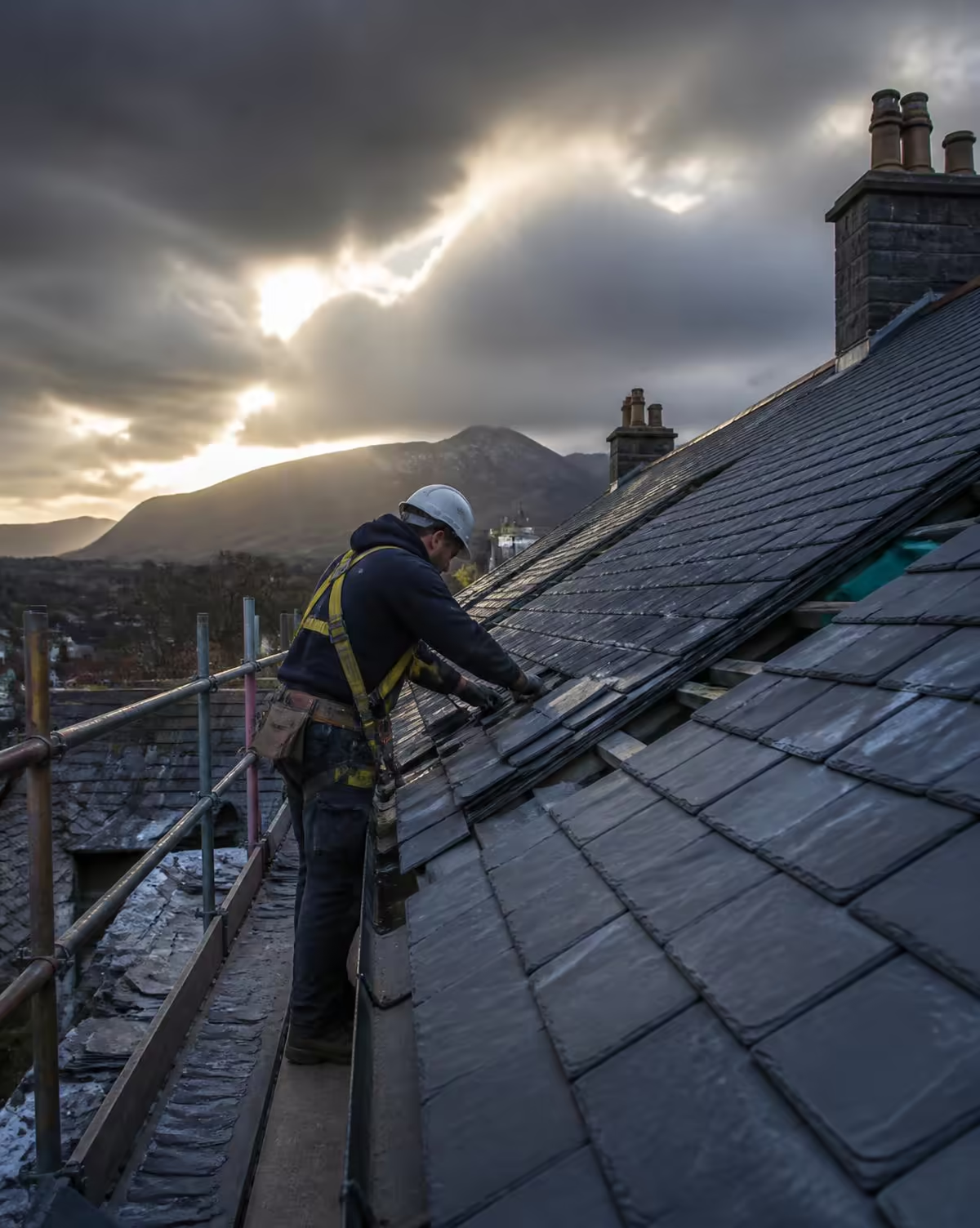
It adds a significant fixed cost, and on smaller repairs it can exceed the roofing work itself. It is not always necessary: towers, mobile platforms and roof ladders suit many jobs, and visual inspection can be done without any access equipment. Where scaffolding is genuinely required, the value comes from planning all the work around it.
When scaffolding is the right answer
Where work will take more than a short period, where materials have to be moved, where the roof is high or the ground unsuitable for a tower, and where a safe working platform is needed along a length of roof rather than at one point.
Chimney work, verge and ridge renewal, and any covering renewal generally fall into this category.
When it is not
A single component replacement at accessible height, gutter work, or inspection. For looking rather than touching, a visual drone survey covers whole elevations without any access provision, and it identifies where physical access is actually needed.
It is entirely reasonable to ask why scaffolding is proposed and what the alternatives would be.
- Ask what access method is proposed and why
- Ask whether a tower or platform would serve
- Ask whether a visual survey could establish the scope first
- Ask what else could be done while the scaffold is up
Getting value from it once it is up
Scaffolding is largely a fixed cost, so the marginal cost of additional work while it is standing is comparatively low. Repointing a chimney, renewing verge mortar, clearing and checking gutters, or dealing with a second known defect are all worth pricing at the same time.
Planning that in advance is much cheaper than bringing the scaffold back next year.
Getting an independent view before agreeing to scaffold
Where scaffolding is proposed for what sounds like a contained repair, a second opinion or a visual survey can confirm whether it is genuinely necessary before the cost is committed. This is particularly worth doing where the roof has not been inspected in detail and the proposal is based on assumption rather than a stated finding about what needs reaching and why.
It also helps to ask how long the scaffold is expected to remain in place, since hire costs generally accrue with duration and a job that overruns for reasons unrelated to the roof can add unexpectedly to the figure. Agreeing an expected timescale, and what happens if it changes, avoids that cost being open-ended. Where the answer to any of these questions is vague, treat that as a reason to seek a second opinion before the scaffold is booked, since committing to the access cost is much harder to reverse than committing to the repair itself.
What evidence should you look for?
These are indications, not conclusions. Each one narrows where to look; only an inspection confirms a cause.
Scaffolding quoted for a single small repair.
Alternative access, or combining work, may give better value.
Areas that may need investigating
- alternative access methods
- other outstanding work
Urgency: Monitor
Access planning is a commercial decision within planned work rather than a defect requiring response.
Repair or replace?
Where scaffolding is unavoidable, renewing a whole detail rather than patching part of it is often the better long-term value, because the access cost will not recur.
How we can help
- Roof RepairsPlanned roof repair fixes an identified defect — slipped slates, cracked tiles, failed flashings, valley or ridge problems — before it becomes water ingress. Repairs are appropriate where the covering and structure are otherwise sound and the fault is localised.
- Drone Roof InspectionsA drone roof inspection uses a camera-equipped unmanned aircraft to photograph and film every part of a roof at close range without scaffolding, ladders or anyone working at height. It produces high-resolution evidence of the actual condition of ridges, valleys, chimneys, flashings and coverings, delivered as a documented report you can keep, share and compare against future inspections.
- Chimney Repairs & RepointingChimney repair covers repointing, rebuilding, flaunching, pot and cowl work and the lead flashings that seal the stack to the roof. Chimneys are the most weather-exposed masonry on a building and a very common source of damp attributed to the roof.
Related questions
What should you do next?
Ask for the access cost separately, for alternatives to be considered, and for a list of everything worth doing while the equipment is in place.
Last updated 2026-09-16.
Get a written diagnosis on your roof
Free inspection and quotation across Cumbria, southern Scotland and the North East. For water coming in now, call 07777389016 — answered 24/7.