
Repair or replace
Can an old slate roof still have years of life left?
How to judge remaining life in a slate roof: slate condition, nail condition, battens, underlay and how much has already been refitted.
- Evidence before expenditure
- Options, not pressure
- Updated 2026-09-16
24/7
Emergency roofing response across Cumbria and the Borders, answered day and night.
Frequently, yes. Good natural slate is extremely durable, and the usual limiting factor is the nails rather than the slate itself. A roof whose slates are sound but whose fixings are failing can sometimes be stripped and relaid using the existing slate, which is a materially different proposition from a full replacement.
How to judge the slate
Sound slate rings when tapped, has clean edges and shows no delamination. Slate near the end of its life becomes soft at the edges, splits along its layers, or flakes; holes enlarge and tails break away.
Condition often differs by elevation, so a slope taking prevailing weather may be well behind a sheltered one on the same roof.
The nails, and what they mean
Corroded nails release slates one at a time over years. Where several have already been refitted with clips across a slope, that is a reliable indication of where the roof is in its life — regardless of how good the slate looks.
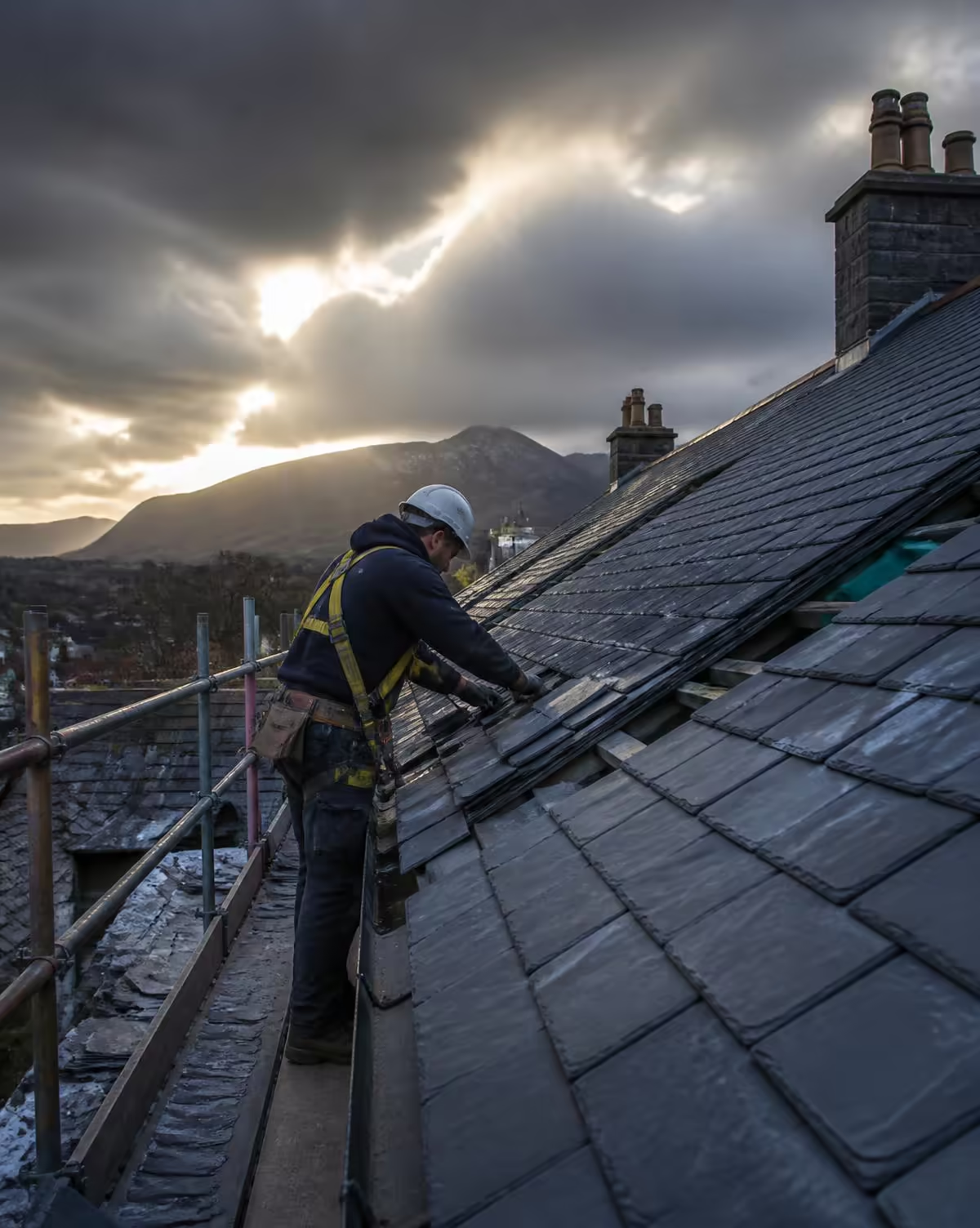
This is what makes stripping and relaying worth considering: sound slate is re-hung on new battens and underlay with new fixings, giving a long further life without buying a new covering.
- Do slates ring or sound dull when tapped?
- Are edges clean, or soft and flaking?
- How many slates have already been clipped back?
- What condition are the battens and underlay in?
Where re-use is not possible
Some slate simply will not take another century, and a proportion always breaks during stripping, so replacement slate is needed to make up the shortfall. Matching size, thickness and colour then becomes the practical question.
An honest assessment says what proportion is likely to be reusable and how the balance will be made up. Anyone certain of that figure before stripping begins is estimating.
Why exposure changes the answer by elevation
A slope facing the prevailing wind and rain takes far more weathering over the same period than a sheltered one on the same building, so nail corrosion and slate wear are rarely uniform across a roof. This is why an assessment of only the most visible slope can understate how much life remains elsewhere.
Recording condition separately for each elevation, rather than describing the roof as a single average, gives a more honest basis for deciding whether the whole roof needs attention or only the exposed part of it.
What evidence should you look for?
These are indications, not conclusions. Each one narrows where to look; only an inspection confirms a cause.
Slates look sound but several have slipped in unrelated places.
Fixings may be failing while the covering itself remains serviceable.
Areas that may need investigating
- nail condition
- how many have been clipped
- batten condition
Slate edges are soft, flaking or delaminating.
The covering itself may be near the end of its life on that elevation.
Areas that may need investigating
- condition by elevation
- proportion affected
Urgency: Monitor
An old slate roof in sound condition is not a defect. Periodic inspection is the proportionate response until movement or ingress appears.
Repair or replace?
Where slate is sound and fixings are not, stripping and relaying with the existing slate is often the best value option and should be quoted as an alternative to replacement. Where the slate itself has deteriorated, renewal of the covering is the honest answer.
Partial renewal is worth costing when
- One elevation deteriorated, others sound
Substantial repair fits when
- Strip and relay sound slate on new battens and underlay
Replacement becomes the better option when
- Slate itself soft, flaking or delaminating across the roof
How we can help
- Slate RoofingSlate roofing covers the installation and repair of natural and fibre-cement slate roofs. Natural slate is the traditional covering across much of Cumbria and the Borders, has an exceptionally long service life, and is usually limited by its fixings rather than the slate itself.
- Roof SurveysA roof survey is a documented assessment of a roof's condition, remaining service life and defects, delivered as a written report with photographs and prioritised recommendations. It is used for property purchases, planned maintenance budgeting, insurance, dilapidations and settling disagreements about whether a roof needs replacing.
- New RoofsA new roof means stripping the existing covering back to the rafters and rebuilding with new underlay, battens, covering, flashings and roofline details. It is the right decision when fixings have failed across the whole roof, when the covering has reached the end of its service life, or when repairs are recurring faster than they can be justified.
Related questions
What should you do next?
Ask for an assessment of slate condition and nail condition separately, and for stripping and relaying to be quoted alongside any replacement proposal.
Last updated 2026-09-16.
Get a written diagnosis on your roof
Free inspection and quotation across Cumbria, southern Scotland and the North East. For water coming in now, call 07777389016 — answered 24/7.