
Choosing a roofer
What should I ask if a roofer recommends complete replacement?
How to test whether a recommendation to replace a roof is supported by evidence, and which questions expose an over-specified scope.
- Evidence before expenditure
- Options, not pressure
- Updated 2026-09-16
24/7
Emergency roofing response across Cumbria and the Borders, answered day and night.
Ask what evidence shows the whole roof has failed rather than part of it: what was inspected, whether fixings were checked from a lifted covering, whether battens and underlay were seen, and why repair or a strip and re-lay would not do. A replacement supported by findings is reasonable; one supported by opinion is not.
Ask what failed, and how they know
Replacement is the right recommendation when failure is general rather than local — fixings corroding across the roof, battens and underlay at the end of their life, or a covering that can no longer be re-fixed. Each of those is a finding, and each can be shown.
So ask: which of those applies, and what did you see that establishes it? An answer about the roof's age is not evidence about its condition.
- Which components have failed, and across how much of the roof?
- Was a covering lifted to check fixing condition?
- Were battens and underlay seen, and where?
- Was the roof space inspected?
- Can I see dated photographs of each finding?
Ask why the alternatives were ruled out
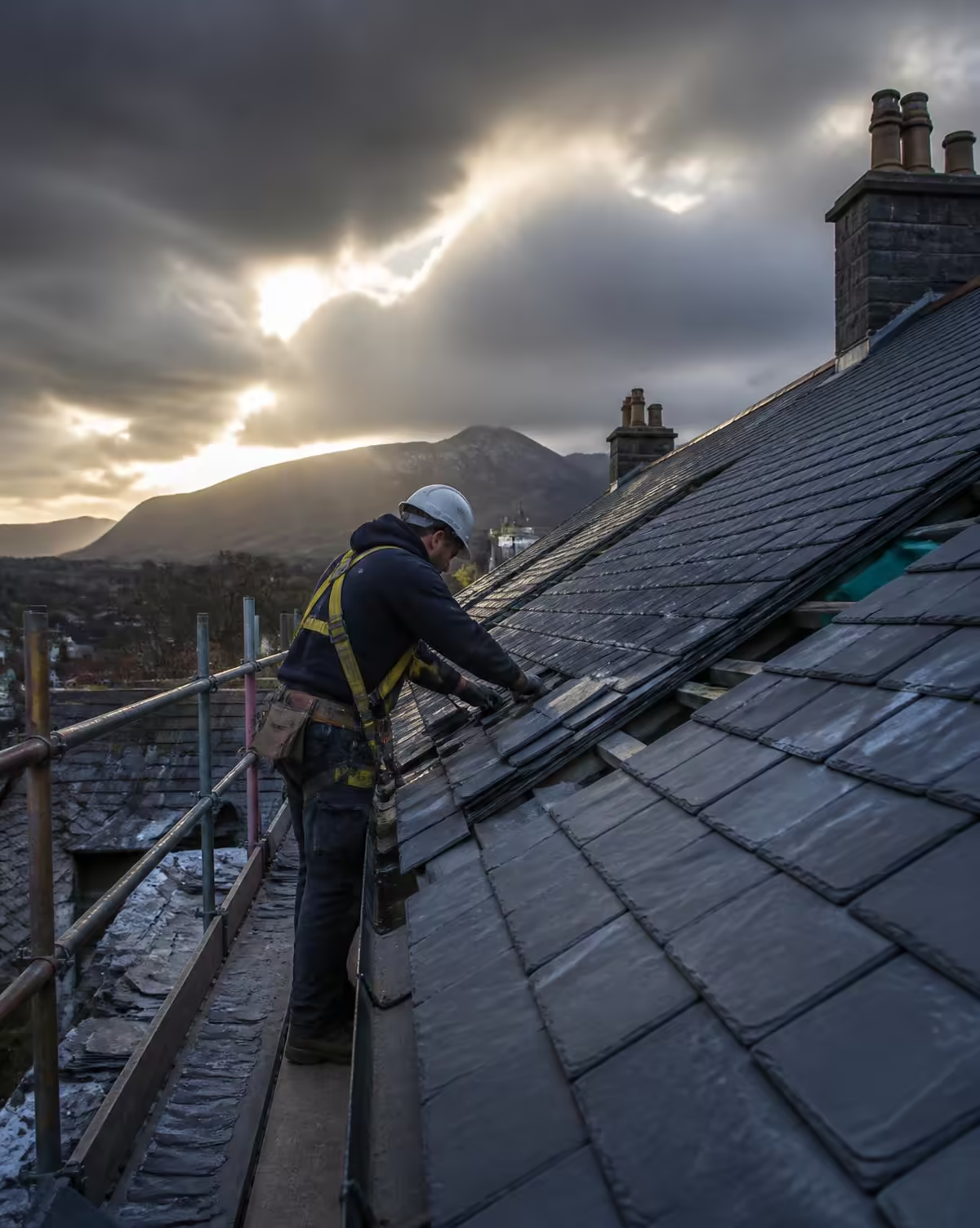
There is usually a middle option. Repairing one elevation. Renewing failing details. On slate, a strip and re-lay that renews battens, underlay and fixings while reusing sound original slate.
Ask why each is unsuitable here. A contractor who has genuinely considered them will explain; one who has not will restate the recommendation.
Ask what happens to the existing material
On a slate or handmade tile roof, this question has real financial weight. If much of the covering is reusable, a strip and re-lay may cost significantly less than full replacement and keeps the building's appearance.
Ask what proportion is reusable and how that was assessed. Vagueness here often means the assessment was never done.
Get a second opinion — properly
For work of this scale, a second inspection is proportionate. Ask the second contractor to inspect independently rather than commenting on the first quotation, so you get a fresh diagnosis rather than an anchored one.
If both, working separately, find the same general failure, the recommendation is well founded and you can proceed with confidence.
Then check the scope and the terms
Once replacement is agreed as the right course, the written scope matters: coverings, battens, underlay, ridge and verge system, flashings, access, disposal, programme, payment stages and the guarantee.
Take the time to compare scopes. Replacement is the largest roofing decision most owners make, and a few days spent testing it costs nothing.
What evidence should you look for?
These are indications, not conclusions. Each one narrows where to look; only an inspection confirms a cause.
Replacement recommended with no photographs and no lifted covering.
General failure has not been demonstrated, so the scope may be larger than needed.
Areas that may need investigating
- fixing condition from a lifted sample
- batten and underlay condition
- independent inspection
Alternatives such as strip and re-lay were not discussed.
A lower-cost option that reuses sound material may have been overlooked.
Areas that may need investigating
- proportion of covering reusable
- condition of each elevation separately
Urgency: Arrange an inspection
An independent inspection is the proportionate check before committing to whole-roof work.
Treat it as more urgent if you see:
- Water is entering
- You are being pressed to commit immediately
Repair or replace?
Replacement is justified by general failure of fixings, battens or underlay. Where those are sound, repair or strip and re-lay usually delivers the same weathertightness for less.
A local repair is realistic when
- Failure confined to identifiable components or one area
Substantial repair fits when
- One elevation failing while others remain sound
Replacement becomes the better option when
- Fixings, battens and underlay failing across the whole roof
Further investigation is the right next step when
- No evidence yet that failure is general rather than local
How we can help
- Roof SurveysA roof survey is a documented assessment of a roof's condition, remaining service life and defects, delivered as a written report with photographs and prioritised recommendations. It is used for property purchases, planned maintenance budgeting, insurance, dilapidations and settling disagreements about whether a roof needs replacing.
- New RoofsA new roof means stripping the existing covering back to the rafters and rebuilding with new underlay, battens, covering, flashings and roofline details. It is the right decision when fixings have failed across the whole roof, when the covering has reached the end of its service life, or when repairs are recurring faster than they can be justified.
- Slate RoofingSlate roofing covers the installation and repair of natural and fibre-cement slate roofs. Natural slate is the traditional covering across much of Cumbria and the Borders, has an exceptionally long service life, and is usually limited by its fixings rather than the slate itself.
Related questions
What should you do next?
Ask for the findings that show general failure, and arrange an independent inspection before agreeing to a full replacement.
Last updated 2026-09-16.
Get a written diagnosis on your roof
Free inspection and quotation across Cumbria, southern Scotland and the North East. For water coming in now, call 07777389016 — answered 24/7.