
Roof inspections
What are the benefits of a drone roof inspection?
Coverage, safety, speed and dated evidence: what a drone survey genuinely adds, and where its limits lie.
- Evidence before expenditure
- Options, not pressure
- Updated 2026-09-16
24/7
Emergency roofing response across Cumbria and the Borders, answered day and night.
Coverage, safety, speed and evidence. A drone reaches every elevation including ones no ladder can serve, without anyone working at height or standing on a fragile covering, usually within a single visit. You keep dated imagery of the condition as found. Its limit is that it records the visible surface and nothing beneath it.
Coverage
The parts of a roof that fail most often — ridges, hips, upper slopes, chimney heads, hidden valleys, box gutters, junctions between roofs — are exactly the parts hardest to reach and impossible to see from the ground. A drone views all of them at close range.
That is the substantive benefit. It is not a novelty; it is seeing the roof.
Safety
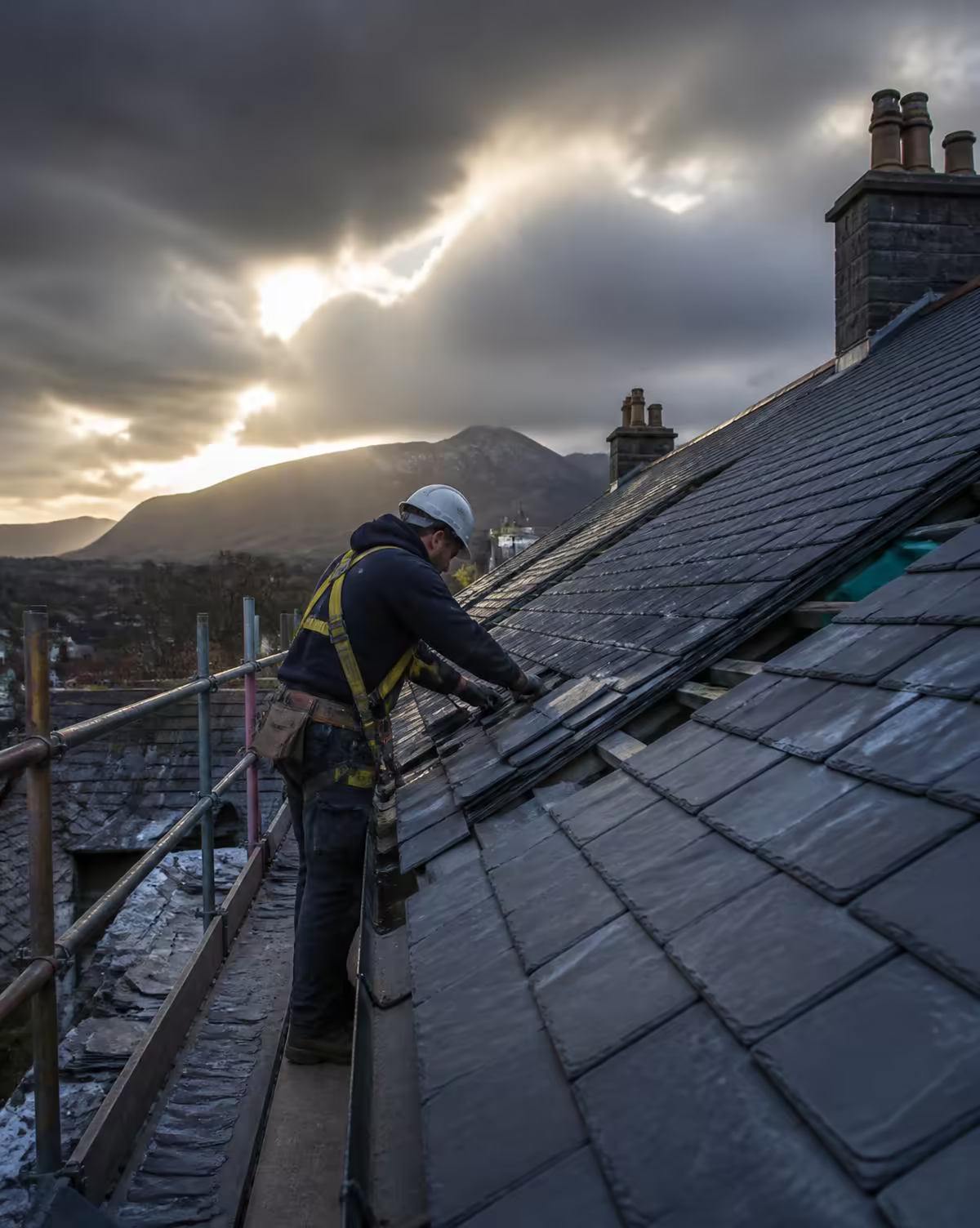
Nobody works at height for the assessment, and nobody walks on slate, ageing concrete tiles or a fragile flat roof to find out what condition it is in. Inspections that involve walking a roof sometimes cause damage themselves.
HSE guidance on working at height is the relevant reference for why avoiding access where possible matters.
- Every elevation covered, including inaccessible ones
- No access equipment for the visual assessment
- No foot traffic on fragile coverings
- Usually completed in one visit
- Dated imagery retained for comparison and evidence
Speed and cost
A survey that would need scaffold or a tower can often be done in a single visit, which removes both the cost and the delay of access equipment for the assessment stage. Access may still be needed for the work itself.
That makes it practical to inspect before deciding, rather than committing to work on assumption.
The honest limit
Imagery shows the outside of the covering. It cannot assess battens, underlay, timber, insulation or moisture within a flat roof build-up, and it cannot test a fixing by hand. Where those matter, physical inspection or testing follows.
Flights also depend on weather and on the site being suitable under CAA rules. Where a flight is not possible, we say so and arrange an alternative.
How the findings change the negotiation or the plan
A survey carried out before a decision — whether that decision is a purchase, a maintenance budget or a response to a storm — gives you a documented condition to act on rather than an estimate based on what could be seen from the pavement. That distinction matters most when money is about to change hands.
Where the roof is sound, the same imagery becomes a dated baseline; where it is not, you have specifics rather than a vague sense that the roof "looks old", which is far easier to act on and to justify to anyone else involved in the decision.
What evidence should you look for?
These are indications, not conclusions. Each one narrows where to look; only an inspection confirms a cause.
Roof is too high or steep to inspect safely.
A survey may be the only practical way to see it without scaffold.
Areas that may need investigating
- all elevations
- ridge, hips and upper slopes
- chimney and valleys
Urgency: Arrange an inspection
A survey is a diagnostic step; the priority follows the findings.
Repair or replace?
Imagery locates and quantifies visible defects, which usually narrows the decision considerably. Concealed conditions still need physical confirmation before renewal is specified.
Further investigation is the right next step when
- Concealed elements and flat roof moisture
How we can help
- Drone Roof InspectionsA drone roof inspection uses a camera-equipped unmanned aircraft to photograph and film every part of a roof at close range without scaffolding, ladders or anyone working at height. It produces high-resolution evidence of the actual condition of ridges, valleys, chimneys, flashings and coverings, delivered as a documented report you can keep, share and compare against future inspections.
- Roof SurveysA roof survey is a documented assessment of a roof's condition, remaining service life and defects, delivered as a written report with photographs and prioritised recommendations. It is used for property purchases, planned maintenance budgeting, insurance, dilapidations and settling disagreements about whether a roof needs replacing.
Related questions
Sources
- Flying in the drone and model aircraft code — Civil Aviation Authority (opens in a new tab)
- Working at height — Health and Safety Executive (opens in a new tab)
What should you do next?
Book a drone survey covering every elevation and ask for the imagery plus a written record of what each finding indicates.
Last updated 2026-09-16.
Get a written diagnosis on your roof
Free inspection and quotation across Cumbria, southern Scotland and the North East. For water coming in now, call 07777389016 — answered 24/7.