
Roof inspections
What happens during a professional roof inspection?
The sequence of a proper roof inspection — external, internal, details and drainage — and what the report should tell you afterwards.
- Evidence before expenditure
- Options, not pressure
- Updated 2026-09-16
24/7
Emergency roofing response across Cumbria and the Borders, answered day and night.
A proper inspection works through the building rather than glancing at the roof: the internal symptom and roof space, the external coverings and details on every elevation, the drainage, and the junctions where most water enters. It ends with dated imagery, an explanation of what each finding indicates, and what could not be established.
Starting inside
Where there is a symptom, the inspection starts with it: where the water appears, its shape and extent, whether it is fresh or historic, and which weather brings it. The roof space is then examined for staining, wet timber, daylight, displaced underlay and where water has actually been tracking.
This matters because internal evidence often points to an entry point some distance away, and starting outside means guessing which part of the roof to look at.
Then the outside, systematically
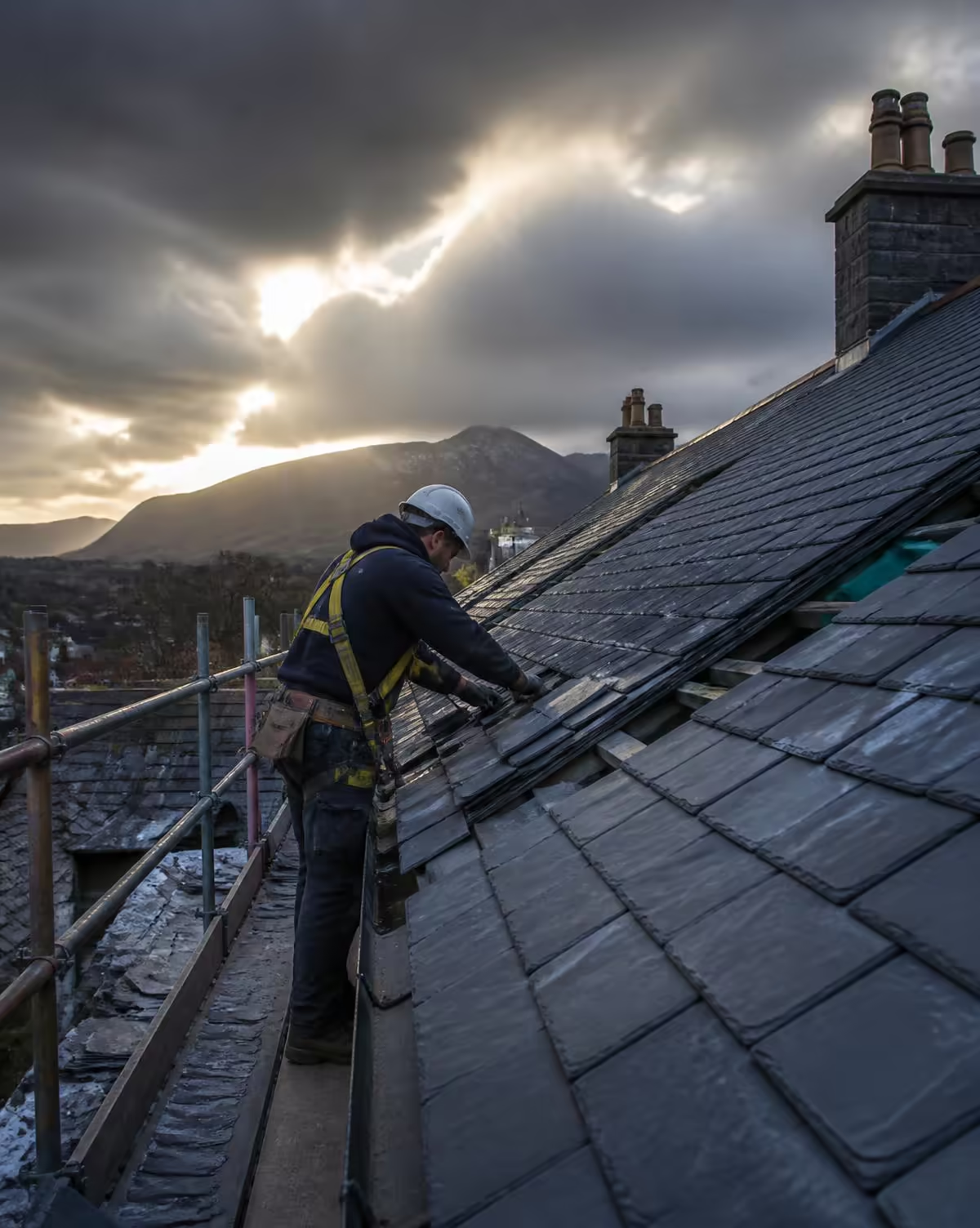
Every elevation, not just the one facing the symptom. Coverings for slipping, cracking, delamination and movement. Ridge, hip and verge bedding for cracking and loss. Flashings at abutments, chimneys and roof lights. Valleys for lining condition, debris and capacity. Gutters, outlets and downpipes for blockage and fall.
Where access is limited, a drone survey covers the whole roof; where a component must be lifted or tested by hand, that requires physical access and should be stated as such.
- Internal symptom and roof space examined first
- All elevations covered, not only the affected one
- Coverings, bedding, flashings and valleys assessed
- Drainage checked for blockage and fall
- Dated imagery captured of each finding
What the report should say
What was examined and how. Each finding, with an image and a location. What that finding indicates, in plain language. What remains uncertain and what would establish it. The severity — whether it is an emergency, needs prompt repair, or can be monitored. Then the options, with trade-offs and expected life.
A report that jumps to a price without the findings is a quotation wearing an inspection's clothes.
What to have ready
When the symptom first appeared, whether it correlates with particular weather or wind direction, any previous repairs and when, and access to the roof space if you have it. Photographs you have already taken are genuinely useful, particularly if the symptom comes and goes.
A leak that only appears in driven rain from one direction is a strong clue, and it is information only you have.
What evidence should you look for?
These are indications, not conclusions. Each one narrows where to look; only an inspection confirms a cause.
Nobody has looked inside the roof space.
The internal evidence that locates the entry point may have been skipped.
Areas that may need investigating
- roof space staining and wet timber
- underlay condition
- water tracks
Only the elevation with the symptom was examined.
Water can travel from a defect on another slope or a shared junction.
Areas that may need investigating
- all elevations
- abutments and shared roofs
- chimney and valleys
Urgency: Arrange an inspection
The inspection is the step that determines whether any subsequent work addresses the actual cause.
Treat it as more urgent if you see:
- Water is entering in quantity
- Components are loose above an area in use
Repair or replace?
The inspection produces the decision rather than assuming it. Repair where failures are local and the covering has life left; renewal where failures are general or the covering is at the end of its service life.
Further investigation is the right next step when
- Concealed elements cannot be assessed without opening up
How we can help
- Roof SurveysA roof survey is a documented assessment of a roof's condition, remaining service life and defects, delivered as a written report with photographs and prioritised recommendations. It is used for property purchases, planned maintenance budgeting, insurance, dilapidations and settling disagreements about whether a roof needs replacing.
- Drone Roof InspectionsA drone roof inspection uses a camera-equipped unmanned aircraft to photograph and film every part of a roof at close range without scaffolding, ladders or anyone working at height. It produces high-resolution evidence of the actual condition of ridges, valleys, chimneys, flashings and coverings, delivered as a documented report you can keep, share and compare against future inspections.
- Roof Leak DetectionRoof leak detection traces water back from where it appears inside to where it actually enters the roof. Water frequently travels along battens, rafters and purlins before it drops, so the ceiling stain is often several metres from the defect. Detection combines internal tracing, external inspection, drone imagery and, where needed, controlled water testing.
Related questions
What should you do next?
Note when the symptom appears and in which weather, then book an inspection that includes the roof space and every elevation with dated imagery.
Last updated 2026-09-16.
Get a written diagnosis on your roof
Free inspection and quotation across Cumbria, southern Scotland and the North East. For water coming in now, call 07777389016 — answered 24/7.