
Roof maintenance
How long can natural slate roofing last?
Why natural slate commonly outlasts its fixings, what nail sickness and delamination look like, and how much of a slate roof can be reused.
- Evidence before expenditure
- Options, not pressure
- Updated 2026-09-16
24/7
Emergency roofing response across Cumbria and the Borders, answered day and night.
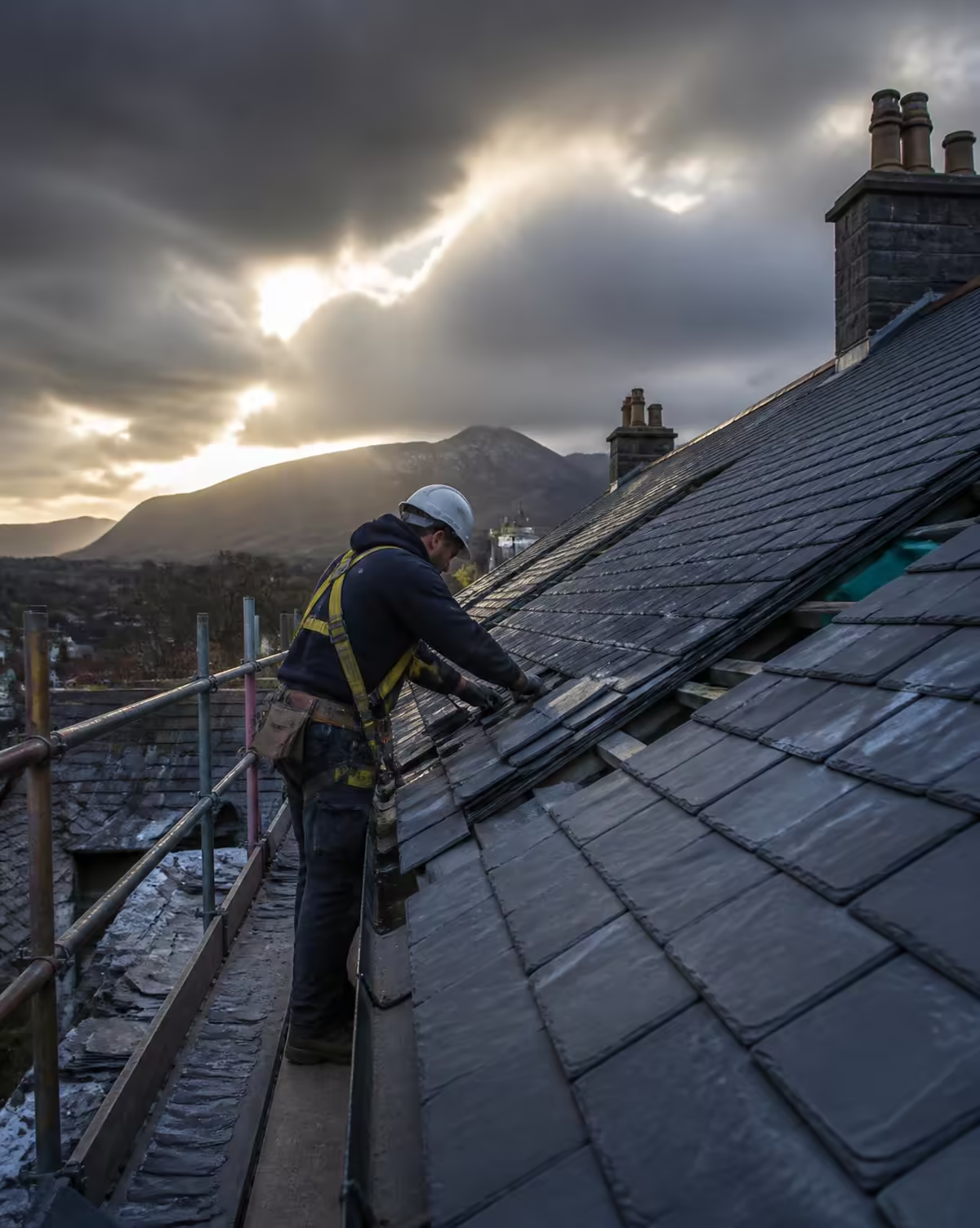
Natural slate is one of the longest-lasting roof coverings in use, and on many older buildings the slate is not what has failed. Fixings corrode, battens weaken and underlay perishes long before good slate does. That is why slate roofs are often stripped, sorted and re-laid using much of the original material.
Nail sickness is the usual limit
Corroding fixings release slates gradually across a roof. The pattern is characteristic: individual slates slipping in different places over several years, with the covering itself still sound. Each one can be replaced, but the underlying cause continues, so the repairs never end.
Confirming it means lifting a sample slate and looking at the nail, which imagery cannot do. It is the single most important finding on an older slate roof, because it changes the whole economics of repair.
Delamination and softness
Some slate deteriorates by splitting into layers, showing thin flaking edges, softness, or a dull, powdery surface. Where that is widespread, slates cannot reliably be re-fixed, and the proportion that can be reused falls.
Where it affects only some slates, sorting during a strip and re-lay recovers the sound ones and supplements with matching material.
- Slates slipping individually across several areas
- Thin flaking or layered edges
- Slates that feel soft or sound dull when tapped
- Previous repairs using clips or mortar rather than nails
- Underlay visible, torn or perished from inside
Strip and re-lay
This is the option most often appropriate on a sound slate roof with failed fixings: slates are carefully removed and sorted, battens and underlay renewed, then the reusable slates re-laid with new fixings and supplemented as needed.
It renews the parts that have actually failed while retaining the material and appearance of the original roof — which also matters where a building is listed or in a conservation area.
Looking after a slate roof
Keep valleys, gutters and outlets clear so water is never held against the covering. Deal with slipped slates promptly, because each gap exposes the underlay. Avoid walking on the roof, and avoid pressure washing entirely — both break slate.
Where mortar-bedded ridges and verges are present, watch them: they usually need attention well before the slate does.
Establishing your roof's position
Ask for an inspection that reports on fixing condition from a lifted sample, the proportion of slate likely to be reusable, batten and underlay condition, and the state of the details. That is what distinguishes a roof with decades left from one due for strip and re-lay.
It is also the information a quotation should be built on, rather than an assumption about age.
What evidence should you look for?
These are indications, not conclusions. Each one narrows where to look; only an inspection confirms a cause.
Individual slates slipping repeatedly in different places.
Nail sickness may be affecting fixings across the whole roof.
Areas that may need investigating
- nail condition on a lifted slate
- batten condition
- underlay condition
Slate edges flaking into thin layers.
Delamination may reduce how much of the covering can be reused.
Areas that may need investigating
- extent across elevations
- sample assessment by hand
Urgency: Arrange an inspection
Slate roofs usually decline gradually, so an assessment now allows a strip and re-lay to be planned rather than forced by ingress.
Treat it as more urgent if you see:
- Water is entering the property
- Slates are loose above an area in use
Repair or replace?
Replace individual slates while failures are isolated. Where fixings are failing generally, strip and re-lay renews battens, underlay and fixings while retaining sound original slate — usually better value than continued patching.
A local repair is realistic when
- Isolated slipped or broken slates with sound fixings elsewhere
Substantial repair fits when
- One elevation showing consistent fixing failure
Replacement becomes the better option when
- Nail sickness or delamination across the roof: strip and re-lay
Further investigation is the right next step when
- Fixing condition not yet confirmed from a lifted sample
How we can help
- Slate RoofingSlate roofing covers the installation and repair of natural and fibre-cement slate roofs. Natural slate is the traditional covering across much of Cumbria and the Borders, has an exceptionally long service life, and is usually limited by its fixings rather than the slate itself.
- Roof SurveysA roof survey is a documented assessment of a roof's condition, remaining service life and defects, delivered as a written report with photographs and prioritised recommendations. It is used for property purchases, planned maintenance budgeting, insurance, dilapidations and settling disagreements about whether a roof needs replacing.
- Heritage RoofingHeritage roofing is the repair and renewal of roofs on listed, historic and traditionally built properties using materials and techniques appropriate to the original construction — natural slate and stone slate, lime mortar, traditional leadwork and hand-formed detailing — and carried out within the consents the building's status requires.
Related questions
What should you do next?
Ask for a slate to be lifted so fixing condition is confirmed, and for the report to state how much of the covering is likely reusable.
Last updated 2026-09-16.
Get a written diagnosis on your roof
Free inspection and quotation across Cumbria, southern Scotland and the North East. For water coming in now, call 07777389016 — answered 24/7.