
Heritage
Roofing on listed and historic buildings: what applies
Consents, materials and methods for roof repairs to listed and historic buildings across Cumbria and the Borders.
- Written by working roofers
- Cumbria-specific
- Updated 2025-04-02
24/7
Emergency roofing response across Cumbria and the Borders, answered day and night.
The short answer
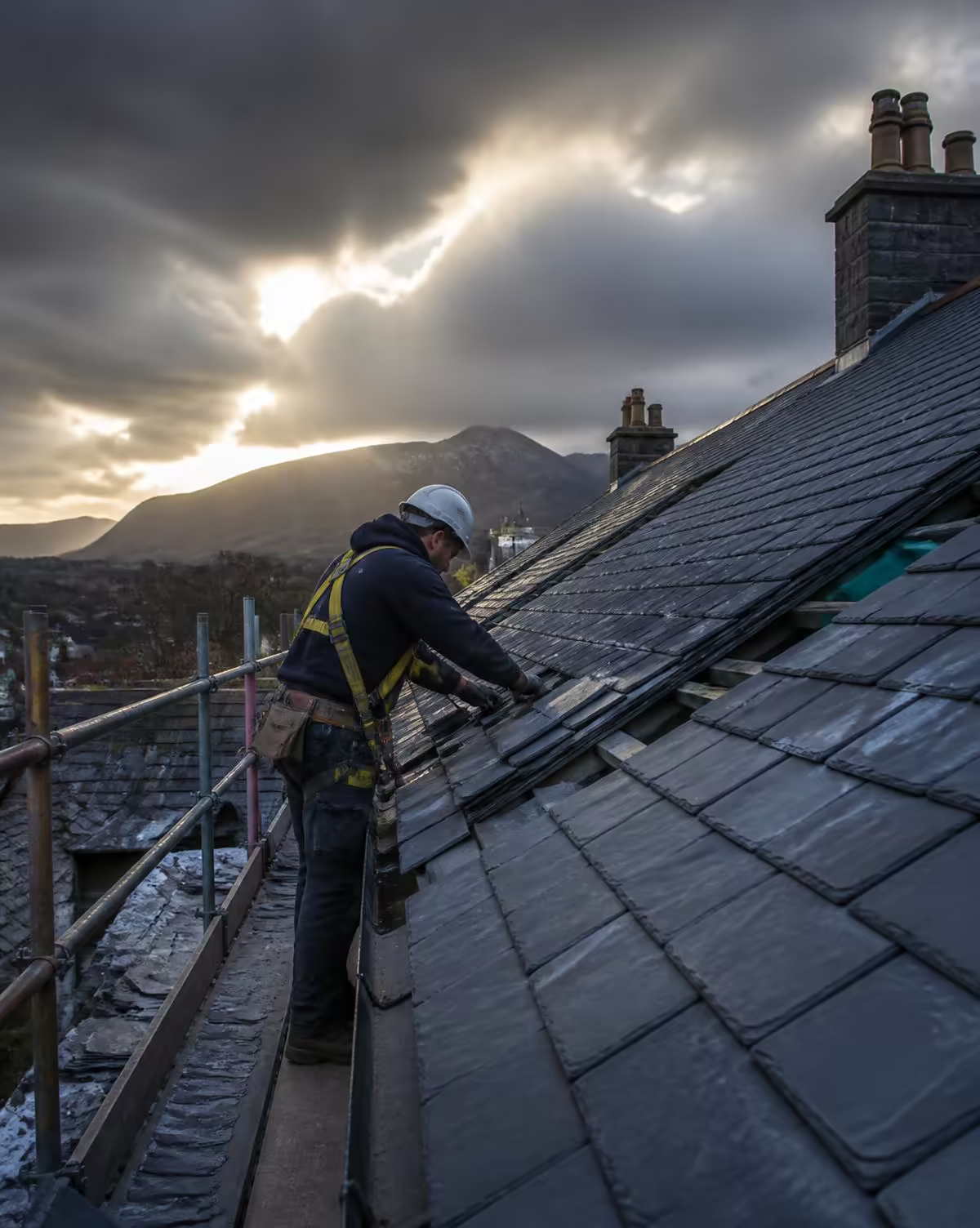
Work to a listed building's roof usually needs listed building consent where it affects character, and materials and methods are expected to match the original — natural slate, lime-based mortars, milled lead and non-ferrous fixings. Like-for-like repair is generally viewed far more favourably than replacement, and conservation officers should be engaged before work is specified, not after.
Key points
What to take away
- Check listed status and consent requirements before specifying anything
- Match material, coursing and detailing to the original
- Lime, not cement, on historic fabric
- Photographic records before and after are expected practice
Consent
Repairs that affect the character of a listed building normally require listed building consent, and unauthorised work is a criminal offence. Conservation area rules and, locally, national park planning policy can also apply. We work to what the local authority requires and provide the survey evidence to support an application.
Materials and methods
Matched natural slate, appropriate coursing and diminishing courses where original, milled lead to correct codes and bay lengths, copper or other non-ferrous fixings, and lime-based mortars that allow the fabric to breathe. Cement pointing on historic stonework traps moisture and causes damage that costs far more to reverse.
Surveying without scaffolding a church
Drone survey is particularly valuable here: it records condition across an entire historic roof, produces evidence for consent applications and grant funding, and avoids erecting scaffold simply to find out what is wrong.
Common questions
Services
Related services
Keep reading
Related guides
How a roof survey works — and what a drone actually adds
A roof survey inspects the covering, ridge, verges, valleys, flashings, chimneys, roofline and — where accessible — the loft, and produces a written condition report with photographs, a diagnosis and prioritised options. Drone inspection adds close, high-resolution imagery of areas that would otherwise need scaffold, which makes surveying large, steep, tall or occupied buildings both safer and quicker.
Slate, tile and flat roof systems in Cumbrian weather
Natural slate remains the best long-term covering for most Cumbrian and Borders property: it handles freeze-thaw, sheds driven rain and typically outlasts its own fixings. Concrete and clay tiles suit many post-war properties at lower cost, and modern single-ply and GRP flat systems, correctly laid to falls, comfortably outperform the old pour-and-roll felt they replace.
Get a written diagnosis on your roof
Free inspection and quotation across Cumbria, southern Scotland and the North East. For water coming in now, call 07777389016 — answered 24/7.