
Roof inspections
Is a drone useful for high, steep or difficult roofs?
Why difficult roofs benefit most from aerial survey, and what still cannot be established without access.
- Evidence before expenditure
- Options, not pressure
- Updated 2026-09-16
24/7
Emergency roofing response across Cumbria and the Borders, answered day and night.
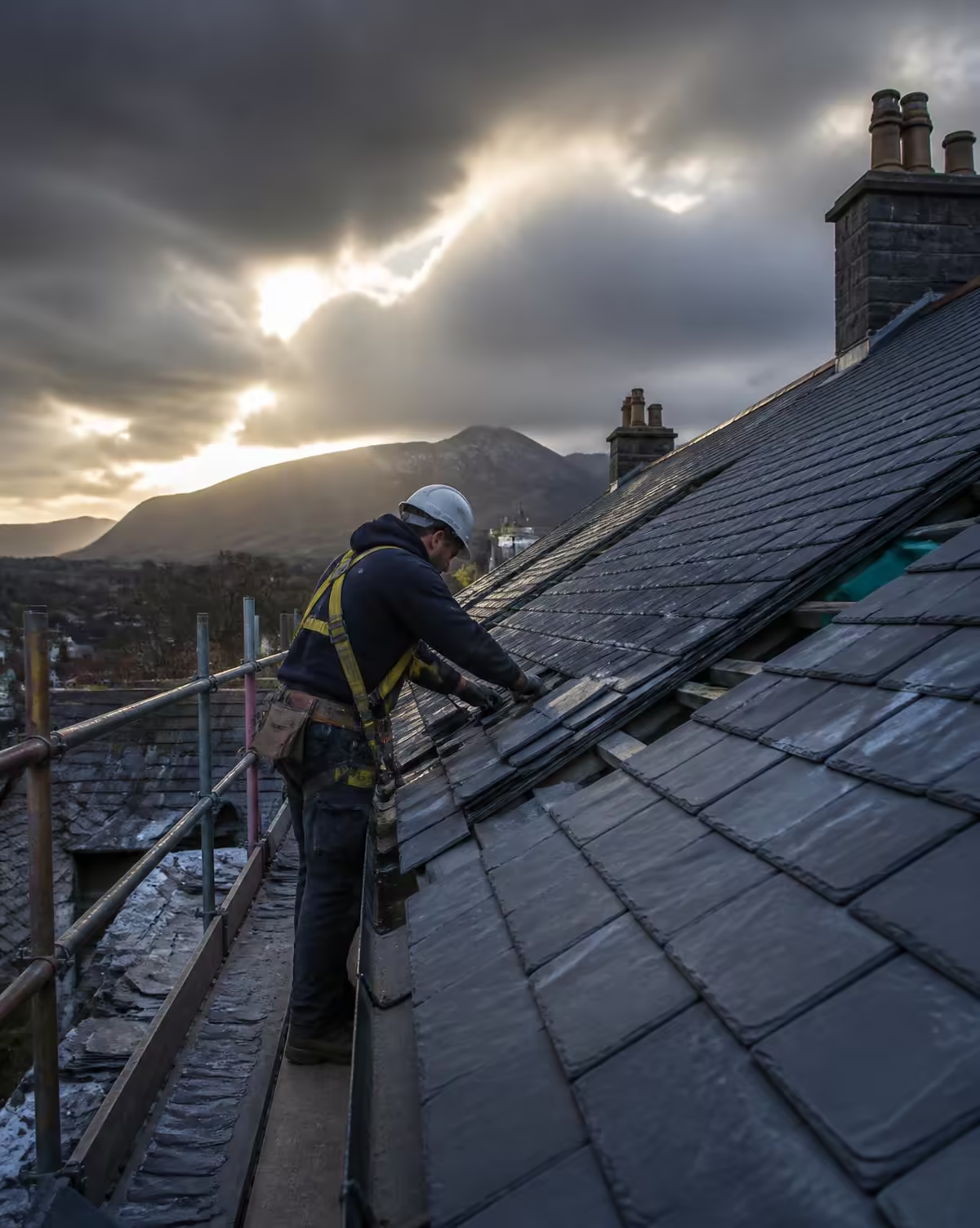
These are the roofs where it helps most. Tall buildings, steep pitches, complex plans, hidden valleys, roofs behind parapets and roofs over extensions are precisely the ones nobody can see or safely reach — and often the ones neglected for years as a result. A survey covers them in one visit without access equipment.
Why difficult roofs get neglected
Because inspecting them costs money before anyone knows whether work is needed. Scaffolding a three-storey property or a steep slate pitch just to look is a serious expense, so the look is postponed, and problems are found only when water arrives inside.
Removing the cost of looking changes that. Condition can be established as a matter of routine rather than a decision.
The areas that benefit
Upper slopes and ridges on tall buildings. Steep pitches where foot access risks damaging the covering. Hidden valleys and box gutters between roofs. Areas behind parapets. Chimney heads and pots. Roofs over rear extensions overlooked by nothing.
These are also the areas where failures do the most damage before they are noticed, because water has further to travel and more to wet on the way.
- Upper slopes and ridges on tall buildings
- Steep pitches unsafe to walk
- Hidden valleys, box gutters and parapet areas
- Chimney heads, haunching and pots
- Roofs over extensions with no viewpoint
Practical constraints
Wind at height, rain, and proximity to obstructions all affect whether a flight is possible and how close it can safely get. Sites have to be suitable under the CAA's rules for the surroundings. Dense tree cover or very confined spaces can restrict what is achievable.
Where the survey cannot cover part of a roof, that should be stated in the report and an alternative arranged, not quietly omitted.
What still needs access
Physical testing of fixings, lifting components, opening up, and the repair work itself. On a difficult roof, knowing the scope first is what makes the access proportionate — which is where most of the saving actually comes from.
Why difficult roofs still need a physical check eventually
A survey establishes what the visible surface is doing, which on a difficult roof is usually the missing piece of information. It does not remove the eventual need for someone to test a fixing, lift a component, or inspect the roof space where findings suggest concealed condition matters.
The practical sequence is survey first to decide whether that access is warranted, then plan the access around what was actually found rather than guessing at the scope before anyone has looked.
What evidence should you look for?
These are indications, not conclusions. Each one narrows where to look; only an inspection confirms a cause.
A roof area has not been seen in many years.
Deterioration may be well advanced without any internal symptom yet.
Areas that may need investigating
- all inaccessible areas
- valleys and box gutters
- chimney condition
Urgency: Arrange an inspection
Unseen roof areas are where problems mature unnoticed, so establishing condition is worthwhile before symptoms appear.
Repair or replace?
Findings on difficult roofs often justify planned work while it is still local. Waiting until access is unavoidable usually means the scope has grown.
Further investigation is the right next step when
- Areas a flight could not cover
How we can help
- Drone Roof InspectionsA drone roof inspection uses a camera-equipped unmanned aircraft to photograph and film every part of a roof at close range without scaffolding, ladders or anyone working at height. It produces high-resolution evidence of the actual condition of ridges, valleys, chimneys, flashings and coverings, delivered as a documented report you can keep, share and compare against future inspections.
- Roof SurveysA roof survey is a documented assessment of a roof's condition, remaining service life and defects, delivered as a written report with photographs and prioritised recommendations. It is used for property purchases, planned maintenance budgeting, insurance, dilapidations and settling disagreements about whether a roof needs replacing.
Related questions
Sources
- Flying in the drone and model aircraft code — Civil Aviation Authority (opens in a new tab)
What should you do next?
Book a survey covering the areas nobody can see, and ask for the report to state any part of the roof that could not be covered.
Last updated 2026-09-16.
Get a written diagnosis on your roof
Free inspection and quotation across Cumbria, southern Scotland and the North East. For water coming in now, call 07777389016 — answered 24/7.